
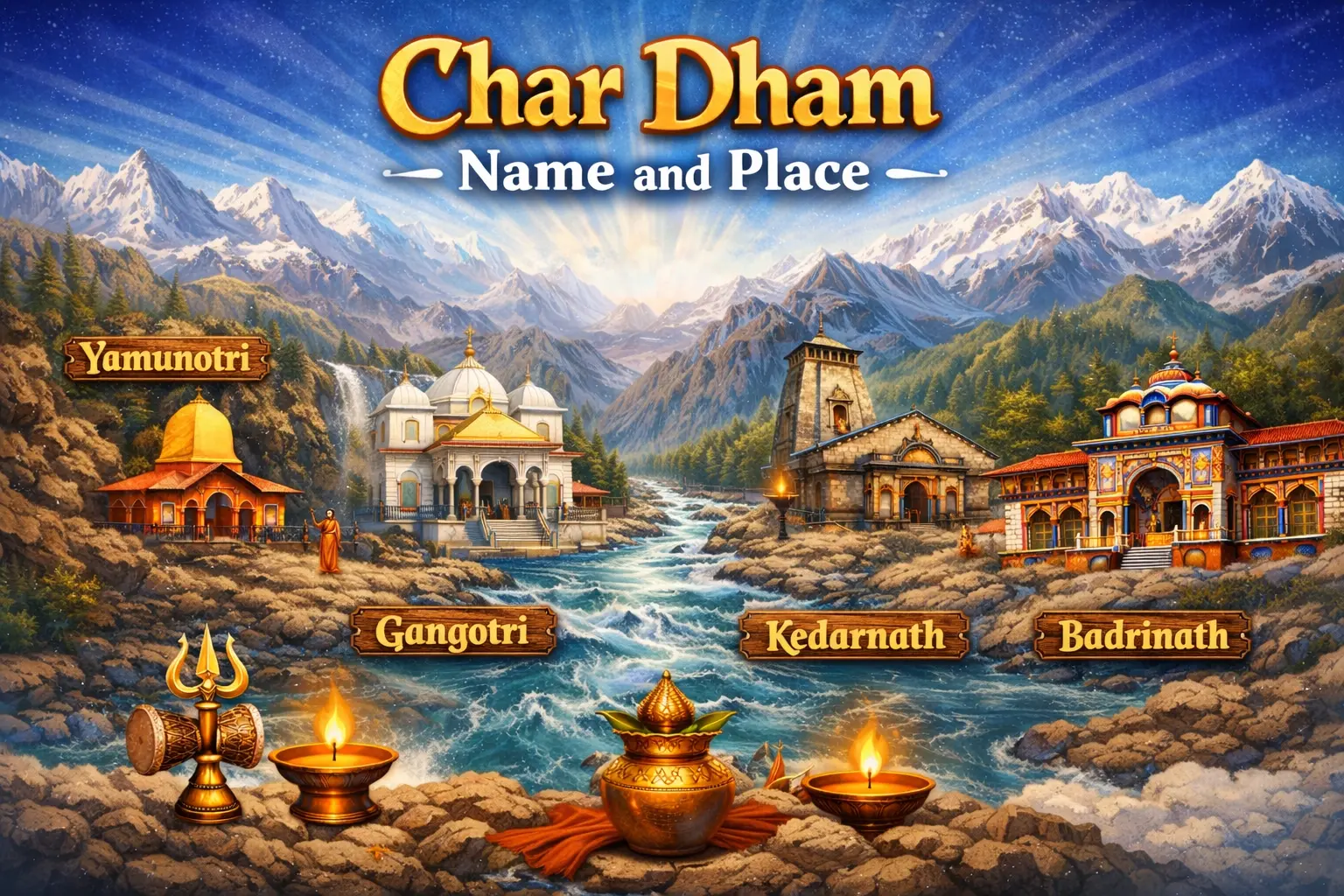
Understanding the Char Dham Name and Place is the first step towards organizing one of the most pious journeys in India. Char Dham is a name given to four holy temples situated in the Garhwal range of the Himalayas in Uttarakhand, namely Yamunotri, Gangotri, Kedarnath, and Badrinath. These temples combined make up a divine route that millions of devotees dream of accomplishing in their lifetime.
This journey is also associated with the Chota Char Dham Yatra and is known to purify one’s soul, increase one’s faith, and provide peace of mind. In this article, we will tell you all about each dham in detail, including its location, importance, and what a pilgrim must know before embarking on his or her journey.
What Does Char Dham Mean?
The name Char Dham literally translates to four sacred abodes. The four shrines are located in different regions of Uttarakhand and are supposed to be visited in a set order. When people look for 4 Dham Name & Place, they are actually looking for the four Himalayan shrines that symbolize purification, awakening, detachment, and fulfillment.
Yamunotri – The Source of the Yamuna
Place: Uttarkashi district, Uttarakhand
Yamunotri is the most western shrine of the Char Dham circuit and the beginning of the yatra. Yamunotri is a shrine to Goddess Yamuna and the source of the Yamuna River. The temple is visited by devotees seeking purification and embarking on their yatra with a fresh slate. The temple is situated close to hot water springs, where devotees cook rice as an offering.
Spiritual Significance: Purification and renewal
Travel Tip: The temple is accessible after a short trek from the motorable point.
Gangotri – The Origin of the Ganga
Place: Uttarkashi district, Uttarakhand
Gangotri is the second destination in the Char Dham Yatra circuit. This temple is dedicated to Goddess Ganga, whose waters are said to cleanse one’s sins and provide clarity to the mind. Gangotri represents the spot where Goddess Ganga landed on Earth, as per Hindu mythology. The Himalayan environment further enhances the pious and divine ambiance of this place.
Religious significance: Awakening and truth
Travel Tip: Gangotri is a road-accessible destination, which makes it less physically taxing than Yamunotri.
Kedarnath – The Abode of Lord Shiva
Place: Rudraprayag district, Uttarakhand
Kedarnath is the third and most difficult destination on the Char Dham Yatra. Kedarnath is a shrine to Lord Shiva, symbolizing renunciation and realization. Located at a very high point, the shrine is surrounded by peaks and stories from the past. For many devotees, Kedarnath is the emotional and spiritual center of the yatra.
Spiritual Significance: Renunciation and realization
Travel Tip: The shrine is accessible only after a trek, although there are options for assisted travel.
Badrinath – The Home of Lord Vishnu
Place: Chamoli district, Uttarakhand
Badrinath is the last temple in the Char Dham Yatra. Badrinath is an abode of Lord Vishnu and represents divine satisfaction and peace. Devotees end their Char Dham Yatra at this point and feel a sense of completion and peace. The temple is situated close to the Alaknanda River and towering mountains.
Religious Significance: Freedom and peace
Travel Tip: Badrinath is easily accessible by road, compared to other dhams.
Char Dham Name and Place at a Glance
- Yamunotri – Uttarkashi district – Source of Yamuna
- Gangotri – Uttarkashi district – Source of Ganga
- Kedarnath – Rudraprayag district – Shrine of Lord Shiva
- Badrinath – Chamoli district – Shrine of Lord Vishnu
These four above-mentioned places together have defined the actual meaning of the Char Dham Name and Place concept.
Chota Char Dham Yatra and Its Importance
The trek to these four shrines is commonly known as the Chota Char Dham Yatra. It is termed chota to distinguish it from the larger Char Dham Yatra that spans the entire country. This trek in the Himalayas is said to symbolize a spiritual journey, one that advances from purification at Yamunotri to salvation at Badrinath.
Char Dham Journey Dates
The Char Dham journey dates vary each year depending on religious calendars and weather conditions. Generally, the temples open between late April and early May and close around October or early November due to heavy snowfall.
Traveling during the official season is important because:
- Temples remain open for darshan
- Roads are safer and accessible
- Rituals and ceremonies are actively conducted
Route for Chardham
The traditional route for Chardham follows below sequence, designed to ensure smoother travel, better acclimatization to altitude, and adherence to long-established pilgrimage customs.
- Yamunotri
- Gangotri
- Kedarnath
- Badrinath
This order allows gradual altitude gain and reflects spiritual progression from cleansing to liberation.
Travel Tips for Char Dham Pilgrims
Following are some important travel tips for Char Dham, ensuring a smooth, safe, and spiritually fulfilling pilgrimage experience.
- Physical preparation for traveling at high altitudes
- Carrying warm clothing even during summer months
- Carrying medicines and basic first aid kits
- Adhering to weather and travel advisories
- Pacing slowly and steadily during the journey
Planning wisely ensures a safe and peaceful pilgrimage.
Why Knowing the Char Dham Name & Place Matters
Knowing the 4 Dham Name and Place is helpful to devotees in the following ways:
- It helps them understand the spiritual significance of the journey
- It helps them plan their routes and schedules better
- It helps them understand the cultural significance of the Char Dham temples
It makes the journey from a physical one to a spiritual one.
Final Thoughts
The Meaning and Location of the Char Dham: Yamunotri, Gangotri, Kedarnath, and Badrinath. The Char Dham name and locations – Yamunotri, Gangotri, Kedarnath, and Badrinath – mean and convey much more than just geographical points on the map. They represent a spiritual journey that has been a guiding force for devotees for many years. Irrespective of whether one takes the road journey or the more advanced options of traveling by helicopter, the spirit of the journey is firmly embedded in devotion, discipline, and faith.
Learning the meaning and location of each dham will enable devotees to treat the Chota Char Dham Yatra as more than just a journey.
Frequently Asked Questions on Char Dham Name & Place
Q. What is the 4 Dham Name and Place?
Ans: Yamunotri (Uttarkashi), Gangotri (Uttarkashi), Kedarnath (Rudraprayag), and Badrinath (Chamoli).
Q. What is the best time to visit Char Dham?
Ans: The best time is between May and June or September and October.
Q. Can senior citizens visit Char Dham?
Ans: Yes, with proper planning and medical preparation, senior citizens can undertake the journey.
Q. Is helicopter travel available for Char Dham?
Ans: Yes, helicopter services for chardham are available for certain routes, depending on weather and season.
Q. How many days are needed for Char Dham Yatra?
Ans: Usually 10 to 14 days, depending on travel pace and route.


